Gardeners often find that the same turf that makes a lawn attractive becomes a persistent nuisance when it creeps into flower beds. Beyond the perennial grasses that escape their boundaries, annual weeds like crabgrass add to the challenge. Effective control requires a strategy that addresses both the visible plants and the underground root systems, all while safeguarding nearby ornamentals.
Timing plays a crucial role in grass management. Most grasses spread through underground rhizomes and by seed, so allowing plants to mature can lead to hundreds of seeds scattering across a bed. Early intervention, ideally before seed heads develop, is key to reducing the workload and preventing a larger infestation.
Chemical Approaches: Broad-Spectrum and Selective Herbicides
For those who opt for chemical solutions, a broad-spectrum herbicide is one of the most effective tools. However, it comes with a significant caveat: it will kill any plant it touches, including ornamental flowers and shrubs. Application requires precision, typically using a wand-style sprayer to target the grass directly. Shielding nearby plants with cardboard or an overturned bucket can minimize accidental overspray. After application, gardeners should observe the grass over several days, expecting it to brown and die. Reapplication may be necessary if some blades remain green, and it's important to resist digging up the grass too soon—the herbicide needs time to travel to the roots.
When grass grows in close proximity to desirable plants, a selective herbicide offers a more targeted solution. These products are formulated to kill only grasses, leaving broadleaf ornamentals unharmed. They are effective against common annual grasses like crabgrass and foxtails, as well as perennials such as nimblewill and quackgrass. However, for perennial nutsedge—often mistaken for grass but actually a sedge—a product specifically labeled for nutsedge is required, as standard grass herbicides won't work.
Pre-emergent herbicides present a different mechanism, preventing new seeds from germinating rather than killing existing plants. They are of limited value for established perennial grasses but can be part of a broader control strategy. Gardeners should note that pre-emergents also block the germination of desirable seeds, so they should be avoided in beds where self-seeding ornamentals are wanted.
Organic and Manual Alternatives
For those who prefer to avoid synthetic chemicals, several organic methods can be effective. Diluted vinegar sprayed on grass may require multiple applications. Boiling water poured directly onto the grass can kill both foliage and roots. Propane torch tools offer a heat-based approach, though root kill is not always guaranteed. Solarization—covering a large area with clear plastic to heat the soil—can eliminate seeds and roots, making it a viable option for converting lawn areas into new garden beds. Corn gluten, an organic pre-emergent, may hinder crabgrass but has no effect on turf grasses that have already invaded.
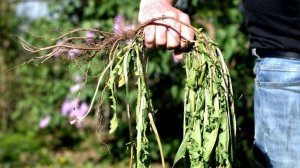
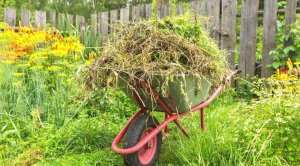
Hand removal remains a practical solution for small infestations. Because most grasses can regrow from even a small root fragment, careful soil loosening and thorough root extraction are essential. This method is labor-intensive and not suited for large, heavily infested areas, but it is environmentally friendly and can be integrated into routine weeding.
Prevention and Long-Term Management
After controlling an infestation, preventive measures can help keep grass at bay. Applying a 3-inch layer of mulch—such as wood chips, shredded leaves, or compost—discourages new grass seeds from germinating and simplifies future weeding. Landscape fabric is an alternative, but it can lead to more work over time as it tears or as weeds germinate on top. Consistent vigilance, especially early in the growing season, remains the most effective strategy for maintaining a grass-free flower bed.