Basil, a staple of summer gardens, can suddenly turn yellow, wilt, or stop growing, leaving gardeners puzzled. The herb, native to subtropical Asia and Africa, is generally easy to grow but is not immune to a range of cultural and biological stressors. From excessive sun and over-fertilizing to fungal diseases and hungry pests, several factors can trigger a basil plant's decline. Understanding these triggers is the first step toward restoring the plant's health.
Basil thrives with at least six hours of direct sunlight daily, but in hot climates, intense midday rays can cause sunscald—yellowing, browning, and crispy leaf edges. If your plants show pale leaves, leggy stems, and slow growth, they may be getting too little light, a common issue for indoor basil. For outdoor beds, taller neighboring crops can also cast unwanted shade. To fix sun issues, move potted basil to bright shade during peak afternoon heat or plant a taller companion on the southwest side to filter the light.
Fertilizing and Pruning: A Delicate Balance
Over-fertilizing is a frequent mistake. Basil needs only a light feeding at planting and perhaps one or two more times during the season. Too much fertilizer produces rapid, weak growth that lacks flavor. Instead, enrich the soil with compost, which improves both nutrition and drainage. For potted plants, a diluted liquid feed every four to six weeks is sufficient. Regular harvesting is equally important; pinching off stems above a leaf pair encourages bushy new growth. If you let the plant flower, leaves turn bitter as energy shifts to seed production. Some varieties, like 'Everleaf Emerald Towers' and 'Lettuce Leaf', are slow to bolt, while others, such as Tulsi holy basil, offer ornamental blooms that attract bees.
Water, Temperature, and Fungal Threats
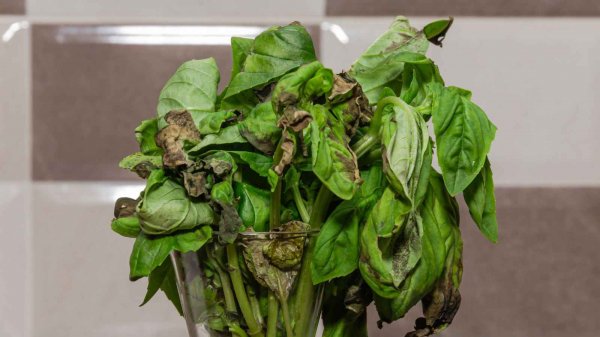
Basil prefers consistent moisture but hates soggy roots. Water when the top inch or two of soil feels dry, and ensure containers have good drainage. Overwatering invites root rot and fungal diseases, while underwatering halts growth. Temperature is another key factor: basil needs warm nights above 50°F; a late frost can blacken leaves. If frost hits, trim damaged stems to healthy green tissue, and cover plants overnight when frost is forecast.
Fungal diseases are a leading cause of basil decline. Fusarium wilt causes stunted growth, blackened stems, and one-sided wilting; there is no cure, so remove and discard affected plants. Downy mildew, which thrives in humid, wet conditions, shows as yellowing between leaf veins and fuzzy dark spores on the underside; no chemical treatment exists, so pull and compost infected plants. Root rot, caused by Pythium or Rhizoctonia, turns roots brown and mushy, leading to yellow, wilted leaves. Botrytis gray mold often enters through harvest wounds, so avoid pruning in wet weather and water at the base.
Pests: The Usual Suspects
Japanese beetles skeletonize leaves, while aphids suck sap and excrete honeydew, attracting sooty mold. Slugs and snails graze on tender shoots, especially at night. For beetles and aphids, a strong jet of water in the morning can dislodge them; for larger infestations, horticultural soap or oil works, but follow label directions to protect beneficial insects. Handpicking beetles into soapy water is effective. Slugs can be trapped with beer or deterred with diatomaceous earth around the plant base.
Reviving a struggling basil plant often comes down to correcting one or two key issues. By assessing light, water, feeding, and signs of disease or pests, gardeners can take targeted action. With a bit of attention, the herb can bounce back and continue producing flavorful leaves well into the season.