As summer temperatures climb and humidity lingers, lawns across many regions become vulnerable to a host of fungal diseases that can quickly turn a lush green yard into a patchwork of brown and yellow. These diseases often appear suddenly, seemingly overnight, and can spread rapidly if not addressed early. Recognizing the specific symptoms of each common turf ailment is the first step toward effective management and preventing widespread damage.
While many lawn diseases share superficial similarities, each has unique characteristics that aid in diagnosis. From the small, bleached spots of dollar spot to the large, irregular patches of brown patch, understanding what you're dealing with is crucial. Here’s a look at seven of the most common summer turf diseases and how to manage them.
Dollar Spot and Brown Patch: The Aggressive Spreaders
Dollar spot, named for the silver-dollar-sized spots it creates, often starts as small, inconspicuous areas that can merge into larger, irregular patches. It thrives on stressed lawns, particularly those lacking nitrogen or suffering from drought. The disease is most active during warm, humid weather with cooler nights. Look for circular spots with straw-colored, bleached centers and individual grass blades showing lesions with reddish-brown borders. In high humidity, a white, cobweb-like fungal growth may be visible. Management focuses on cultural practices: increasing nitrogen fertility, improving drainage, and watering deeply but infrequently to avoid keeping grass wet overnight. This disease is aggressive, so consistent care is essential.
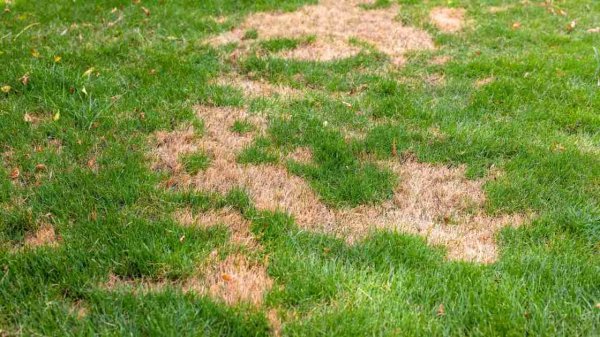
Brown patch is another aggressive disease that can destroy entire lawns in a matter of days under the right conditions. It flourishes when daytime temperatures exceed 80°F (29°C) and nighttime temperatures remain above 70°F (21°C), especially with high humidity. Overwatering and excessive nitrogen from over-fertilization increase susceptibility. Symptoms begin as small circular spots that expand into large, irregular patches with lighter centers and darker, spreading borders. Tall fescue and perennial ryegrass are particularly vulnerable. Because the disease can spread via lawn equipment, foot traffic, and water, it's important to avoid walking on infected areas when the grass is wet. Prevention is far more effective than treatment: avoid overwatering, refrain from late-evening watering, improve air circulation, and do not overfeed, especially in summer. Fungicides can help manage active infections but won't repair existing damage.
Leaf Spot, Red Thread, and Rust: Signs of Stress
Leaf spot diseases, caused by several related fungi, produce small, dark spots on grass blades that enlarge and develop light brown centers. Over time, blades yellow and die, leading to a general thinning of the lawn rather than distinct dead patches. This condition often arises during warm, wet periods and is particularly problematic for Kentucky bluegrass and tall fescue. Maintaining proper watering and feeding, along with removing dense growth that holds moisture, is the best defense.
Red thread is one of the easiest diseases to identify due to its distinctive pinkish-red threads extending from dead leaf tips. It typically appears during cool, moist conditions in late spring and early summer, often in lawns with low nitrogen fertility. While it rarely kills grass, it creates weak areas that invite weeds. Improving nitrogen fertility often resolves the problem over a few weeks, as the patches gradually subside.
Rust, another common issue, manifests as orange or reddish spores on grass blades, giving heavily infected lawns an overall orange tint. It develops during warm, humid conditions on slow-growing, stressed grass, particularly Kentucky bluegrass and perennial ryegrass in late summer. The disease spreads through airborne spores and mechanical transfer on equipment or foot traffic. Increasing nitrogen fertility and proper watering promote vigorous growth, which can outcompete the disease. Regular mowing removes infected leaf tips and reduces spore production, though tools should be cleaned frequently to avoid spreading the issue.
Summer Patch and Fairy Ring: Deeper Issues
Summer patch, like brown patch, creates dead areas that can expand to several feet across, typically appearing during the hottest part of summer. It primarily affects Kentucky bluegrass and fescue, especially in compacted or poorly drained soils. This root disease develops during cool, moist spring conditions but only shows symptoms when summer heat stresses the damaged root systems. Management involves improving drainage, reducing thatch, adjusting soil pH if necessary, and avoiding overwatering, as the disease often signals underlying soil problems.
Fairy rings produce distinctive circular patterns of dark green grass, mushrooms, or dead zones that expand outward each year. Three types occur: Type 1 creates dead grass rings, Type 2 produces rings of dark green, rapidly growing grass, and Type 3 results in mushroom rings without affecting grass growth. These rings are caused by underground fungal activity that releases nitrogen or creates water-repellent zones. Treatment depends on severity; minor rings may only require removing mushrooms, while severe cases might need soil renovation, including deep cultivation, adding organic matter, and reseeding.
Early detection and proper cultural practices are key to managing summer lawn diseases. By understanding the specific conditions that favor each disease and taking proactive steps, homeowners can maintain a healthier, more resilient lawn throughout the season.