Gardeners often trust that the plants sold at local nurseries are safe and beneficial for their landscapes. However, a surprising number of commonly available ornamentals are invasive species that can escape cultivation and damage natural areas. From fast-growing vines to aggressive ground covers, these plants may look appealing but can quickly become a nightmare.
Invasive plants are often introduced from other regions and, without natural predators or diseases, they spread aggressively. They outcompete native species for sunlight, water, and nutrients, reducing biodiversity and altering habitats. The following list, compiled from horticultural and ecological sources, identifies 20 such plants that are frequently sold at garden centers.
Vines and Ground Covers That Choke
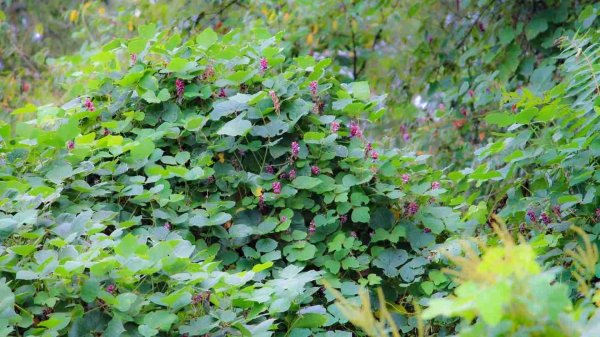
Chinese wisteria (Wisteria sinensis), introduced in 1816, is a popular flowering vine that can displace native species and kill trees by girdling them. Similarly, English ivy (Hedera helix) climbs trees, blocking sunlight and causing branch dieback, eventually killing the host. Japanese honeysuckle (Lonicera japonica) also girdles stems and forms dense mats that smother vegetation.
Winter creeper (Euonymus fortunei) and common periwinkle (Vinca minor) are evergreen ground covers that form dense mats, depriving native plants of space and light. Kudzu (Pueraria montana), a notorious vine, grows up to a foot per day, covering anything in its path, including buildings and abandoned vehicles.
Shrubs and Trees That Spread
Winged burning bush (Euonymus alatus) and Japanese barberry (Berberis thunbergii) are popular shrubs that form dense thickets. Barberry even alters soil chemistry, raising pH and reducing leaf litter. Autumn olive (Elaeagnus umbellata) produces up to 200,000 seeds per year and can grow in poor soils due to nitrogen-fixing roots.
Bradford pear (Pyrus calleryana) and princess tree (Paulownia tomentosa) are invasive trees that outcompete natives. Princess tree regenerates from roots after fire and tolerates pollution, making it highly opportunistic. Chinese privet (Ligustrum sinense) forms dense thickets that shade out native understory plants.
Perennials and Grasses to Watch
Garlic mustard (Alliaria petiolata) and common mullein (Verbascum thapsus) are herbaceous invaders. Garlic mustard alters soil microbiology, while mullein's deep taproot makes it difficult to remove. Weeping lovegrass (Eragrostis curvula) spreads rapidly, increasing wildfire frequency in desert ecosystems. Japanese meadowsweet (Spiraea japonica) forms dense stands, and its seeds persist in the soil for years.
Other notable invasives include nandina (Nandina domestica), which spreads by roots and seeds, and chaste tree (Vitex agnus-castus), which spreads along waterways via bird-dispersed seeds. Bamboo (Phyllostachys spp.) is notoriously difficult to control, with roots traveling up to 20 feet from the original clump.
Gardeners should be aware that some plants, like the compact burning bush variety, are not invasive, but it's essential to check stems and labels. Choosing native alternatives can help preserve local ecosystems and reduce the maintenance burden of these aggressive species.