Check the GTX 1060 tier before you blame the microphone.
GTX 1060
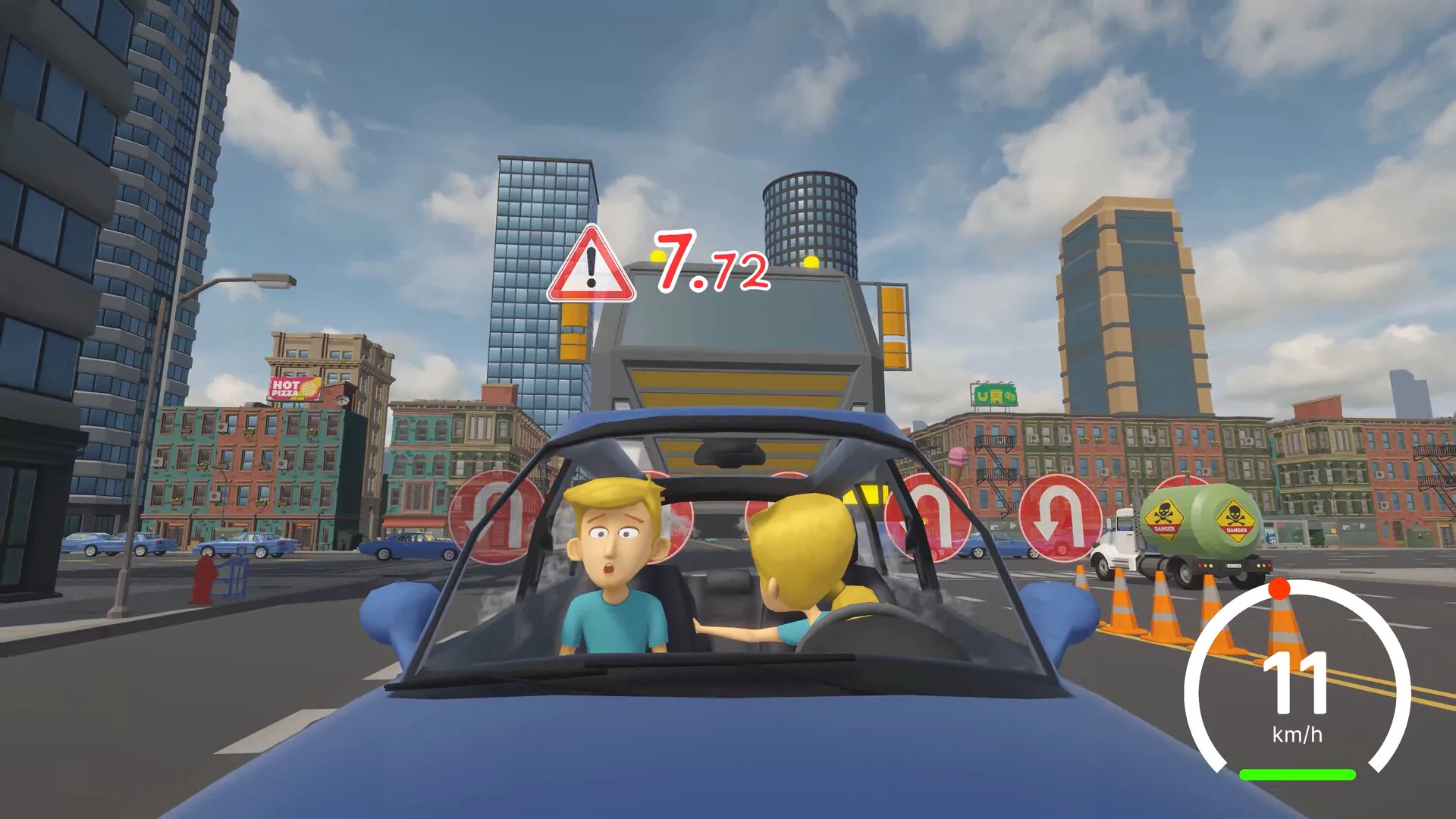
GTX 1060 is the minimum graphics line, paired with Windows 10, 8 GB of memory, and an Intel Core i5 at 2.5 GHz or an equivalent chip. The whole demo is 64-bit and DirectX 12. Broadband is required. Leave 15 GB free. A microphone is required, and so is 4GB or more of video memory.
The recommended tier steps up to Windows 11, an Intel Core i5 at 3.0 GHz or an AMD Ryzen 5 or equivalent, 16 GB of memory, and an RTX 2060 or an RX 7600xt or equivalent. Storage stays at 15 GB. DirectX 12, the microphone, and 4 GB of VRAM stay required on both tiers.
What the minimum row actually asks
The minimum graphics pair is a GTX 1060 or an RX 6800. Those two cards are not the same generation, and either one meets the floor. If you meet one of them and still stutter, the floor is not a promise of a smooth cone lap. It is the line Easy Fox set. The processor floor is an Intel Core i5 at 2.5 GHz or an equivalent, with 8 GB of system memory on Windows 10.
DirectX 12 is the graphics API the demo uses, not a Windows optional feature you can ignore because the game looks simple. A 32-bit Windows install does not meet the 64-bit requirement. Mac and Linux are not supported, so a compatibility layer is not a tested platform.
Broadband is required because the voice route is online. A laptop that meets the GTX 1060 line and then loses the network will still fail the lesson when the token cannot be issued. That failure looks like a silent sister. It is a connection miss. The PC requirement and the voice route fail differently, and only one of them is fixed by a new GPU.
Recommended tier, without a fake FPS number
Recommended means Windows 11, a 3.0 GHz Core i5 or a Ryzen 5 or equivalent, 16 GB of RAM, and an RTX 2060 or RX 7600xt or equivalent. No frame-rate target has been announced for that tier. A number from a forum is not the studio’s bar. If you are buying a card to match the tier, match the named cards, not a guessed frame time.
Storage does not double on the recommended tier. Both tiers ask for 15 GB free. The extra money in the recommended tier is CPU, RAM, GPU, and the newer Windows, not a larger install. A drive that is 15 GB “free” only because cloud files are dehydrated can still stall the first launch cache that patch 1.1.1 warned could take a minute.
Family Sharing does not lower the tier. A shared copy still runs on your GPU. The required age of 0 does not lower it either. A child’s account and a parent’s account hit the same microphone and VRAM lines.
Microphone, VRAM, and DirectX 12
The extra requirement is a microphone, and 4 GB or more of VRAM. A card with a famous name and 3 GB of memory is under that line even if someone calls it close to a 1060. VRAM is separate from the card names because the voice and the scene are both in memory.
Patch 1.0.3 on 7 March 2026 touched microphone sensitivity along with response speed. If she never hears you on a machine that otherwise matches minimum, look at input level before you replace the GPU. Patch 1.0.7 on 23 March 2026 fixed a steering wheel that did not function in certain countries. A wheel is optional hardware. The microphone is not. The passenger seat still expects your voice even if a wheel is plugged in for someone else to hold.
VSync off made movement too fast in patch 1.0.4 on 13 March 2026. If the car surges on a high-refresh monitor, that March fix is the first place to look, then the current build. DirectX 12 stays the API either way. Turning VSync on is not a substitute for the 4 GB VRAM floor.
AMD cards after 1.1.1, and TTS Low
Patch 1.1.1 on 13 July 2026 adds experimental support for Radeon RX 6000, 7000, 8000, and 9000. Experimental is the studio’s word. The first launch after that update can sit for up to a minute while assets cache. Give it the minute before you file a hang. Infinite loading at low frame rate was chased again on 27 September in patch 1.2.5, next to a suspected Ryzen crash and a parking cutscene that would not end.
Patch 1.2.7 on 1 October 2026 targets a crash when the processor and the graphics card are both AMD. If only one of them is AMD, quote 1.2.3 or 1.2.5 instead, depending on whether you are looking at a GPU crash or a Ryzen crash. Patch 1.2.3 also forced TTS Quality to Low while it fixed AMD GPU crashes. Flat speech after that date can be the Low flag, which you can raise, rather than a dead microphone.
The minimum tier’s RX 6800 sits inside the experimental 6000-series window. Meeting the RX 6800 minimum and still crashing on a both-AMD PC is a 1.2.7 problem. The minimum graphics card is still that RX 6800. Report the CPU, the GPU, and the version. Include player.log. Patch 1.2.6 asked for that file while crashes were still under investigation.
| Tier | OS | Processor | Memory | Graphics | Storage |
|---|---|---|---|---|---|
| Minimum | Windows 10 | Intel Core i5 @ 2.5 GHz or equivalent | 8 GB RAM | GTX 1060 or RX 6800 | 15 GB |
| Recommended | Windows 11 | Intel Core i5 @ 3.0 GHz or AMD Ryzen 5 or equivalent | 16 GB RAM | RTX 2060 or RX 7600xt or equivalent | 15 GB |
Both tiers are 64-bit, need DirectX 12 and broadband, and require a microphone plus 4 GB or more of VRAM.