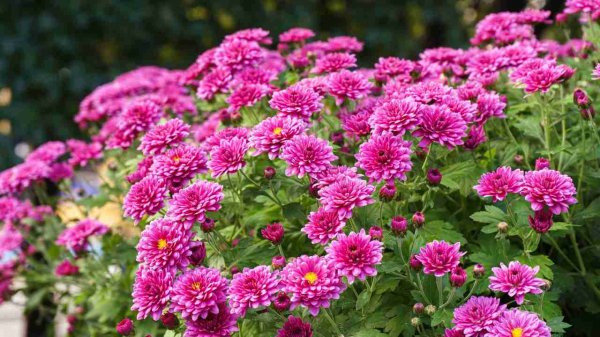
Chrysanthemums, the quintessential fall flower, are more than just a seasonal decoration. These hardy perennials, which bloom from late summer until frost, possess natural chemical defenses that can help manage garden pests. Their essential oils, which give the plants their characteristic scent, are toxic to many insects, offering a natural method of pest control that has been used for centuries.
Native to China, where they were cultivated over 2,000 years ago for ornamental, culinary, and medicinal purposes, chrysanthemums later became a symbol of royalty in Japan. They arrived in Europe in the 17th century and reached the Americas in the late 1700s. Today, garden mums are beloved for their prolific blooms and ease of care, thriving in USDA zones 3-9.
Natural Pest Repellent Properties
The leaves, stems, and flowers of chrysanthemums contain essential oils that act as natural toxins. These oils are effective at repelling mosquitoes, fleas, and ticks, making mums a practical addition to patios and outdoor living spaces. The scent and texture of the foliage can also deter mammals such as mice, though rabbits and deer may occasionally browse on them.
In the garden, chrysanthemums offer dual benefits: they attract beneficial insects like ladybugs, hoverflies, and lacewings, which prey on common pests such as aphids and spider mites. Their aromatic compounds can also make the surrounding area less appealing to invading insects. However, mums are not a universal deterrent; they still rely on pollination and can be affected by pests, especially if watering or air circulation is inadequate.
Companion Planting for Enhanced Pest Control
Pairing chrysanthemums with certain companion plants can amplify their pest-repelling effects. For instance, chives (Allium schoenoprasum) repel aphids with their strong scent, while marigolds (Tagetes spp.) deter squash bugs, thrips, and whiteflies. Echinacea (Echinacea purpurea) attracts pollinators and its deep roots improve soil drainage, benefiting the shallow-rooted mums. Yarrow (Achillea millefolium) is another excellent partner, attracting ladybugs and predatory wasps that feed on aphids and spider mites.
When planting companions, place them within 12 to 18 inches of the mums or any insect-affected plants. This proximity ensures the deterrent effects are most effective.
Pyrethrin: The Insecticidal Power of Mums
Beyond their repellent qualities, chrysanthemums are the source of pyrethrins, a natural insecticide derived from the flower heads of Dalmatian chrysanthemums (Tanacetum cinerariifolium) and painted daisies (Tanacetum coccineum). Pyrethrins work by attacking the nervous systems of insects on contact or through ingestion. Commercial pyrethrin products are available as organic, OMRI-certified insecticides, and are effective against a wide range of pests, including aphids, leafminers, flea beetles, spider mites, whiteflies, squash bugs, cutworms, thrips, and ants.
It is important to note that pyrethrins are broad-spectrum and can harm beneficial insects as well. To minimize impact, apply them early in the morning when pollinators are less active, and avoid spraying flowers and buds. For gardeners who prefer a DIY approach, chrysanthemum flowers can be ground into a powder or steeped in water to create a homemade spray, though the most effective species are T. cinerariifolium and T. coccineum. When handling these materials, wearing a mask and gloves is recommended.
For specific beetle problems, a mixture of pyrethrum and isopropyl alcohol (one tablespoon of alcohol per pint of diluted pyrethrum) can be applied every three to five days for two weeks during the active period. As with any pesticide, use these products as a last resort and follow label instructions carefully.