Citronella candles, a staple of summer evenings, offer only weak and short-lived protection against mosquitoes, according to pest control experts. While they may create a pleasant ambiance, their repellent effect is confined to the immediate vicinity of the flame and does little to reduce the overall mosquito population in a yard. For those seeking to enjoy their outdoor spaces without the constant threat of bites, a more comprehensive strategy is necessary.
Mosquitoes are not just a nuisance; they are vectors for serious diseases such as West Nile virus. Effective management requires a combination of tactics aimed at both reducing breeding grounds and deterring adult insects. The good news is that several proven methods can significantly lower mosquito activity, from simple household fans to targeted larvicide treatments.
Why Citronella Candles Are Not Enough
Citronella candles work by releasing a scent that mosquitoes find mildly unpleasant, but the effect is weak and easily dispersed by wind. Their repellent power is limited to a small radius around the candle, meaning they do not protect an entire patio or yard. Moreover, they do nothing to prevent mosquitoes from breeding or to reduce the overall population. For more reliable personal protection, experts recommend using topical repellents containing Picaridin, which can provide hours of defense.
Key Strategies to Reduce Mosquito Populations
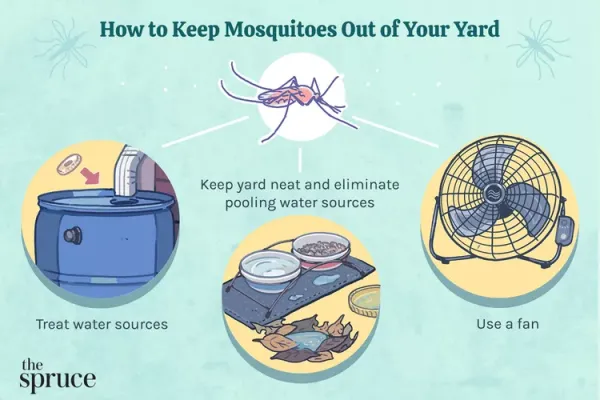
Since mosquitoes require standing water to breed, the most effective control method is to eliminate potential breeding sites. This involves a thorough yard inspection and regular maintenance. Nearly any object that can hold water—from a bottle cap to a child’s toy—can become a mosquito nursery. Common culprits include plant saucers, pet bowls, clogged gutters, and even low-lying areas where rainwater collects. Keeping the yard free of debris and ensuring proper drainage are critical first steps.
For water features like ponds or fountains, draining is not necessary. Instead, treat the water with larvicide dunks or pouches, which are safe for fish and other wildlife. Alternatively, if the pond contains fish species such as bass, goldfish, or mosquitofish, they will naturally consume mosquito larvae. For birdbaths, the simplest solution is to empty and refill them every few days, as mosquito larvae can hatch in as little as four days. Plants that hold water, such as bromeliads, should be flushed regularly or treated with a weekly bacterial larvicide or a longer-lasting methoprene product.
Another effective, low-tech solution is the use of a household fan. A fan creates airflow that mosquitoes struggle to fly against, reducing landings by up to 65 percent. An oscillating fan can cover a larger area, but even a simple box fan placed in the seating area can provide significant relief. Additionally, incorporating mosquito-repelling plants like lavender, mint, rosemary, and marigolds into the landscape can offer some deterrent effect, though they are not a standalone solution.
What About Traps and Sprays?
While mosquito traps and insecticide sprays are popular, their effectiveness is often overstated. Light traps, or bug zappers, kill many insects but have not been proven to reduce mosquito populations or bite rates. Misting systems, which automatically spray insecticides, are not regulated or approved by the EPA, and their efficacy is questionable. Moreover, these systems indiscriminately harm beneficial pollinators. Similarly, ultrasonic repellent devices have not been shown to work, and the Federal Trade Commission has previously cited sellers for making unsubstantiated claims.
Insecticide sprays can kill larvae and reduce mosquito numbers temporarily, but they also pose risks to human health and beneficial insects, and overuse has led to pesticide resistance. Therefore, the most sustainable approach is to focus on habitat modification—removing standing water and maintaining a tidy yard—as the primary line of defense.
In summary, while citronella candles may offer a faint sense of protection, they are no substitute for a comprehensive mosquito management plan. By combining source reduction, physical barriers like fans, and proven repellents, homeowners can significantly reduce mosquito annoyance and the associated health risks.