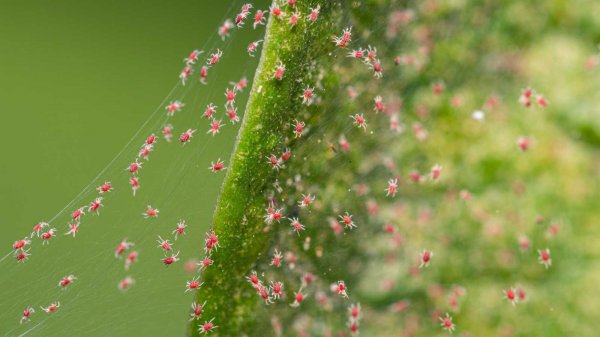
Spider mites, though barely visible to the naked eye, are a formidable foe for gardeners. These tiny arachnids, measuring just 0.1 inches at maturity, can quickly establish colonies of over 100 members on the undersides of leaves, causing significant damage to a wide range of plants. Their presence is often first noticed by the fine, condensed webbing they spin around leaves and stems, a distinct contrast to the loose webs of spiders.
These pests feed by piercing individual plant cells and sucking out their contents, leading to a characteristic yellowed or bronze stippling on leaves. In severe infestations, leaves may shrivel and fall prematurely, and the entire plant can become covered in webbing. While fruit trees can often withstand an infestation for at least a year, annual plants are far more susceptible, and a heavy infestation can ultimately kill a plant. Drought stress and dusty conditions exacerbate the problem, as spider mites thrive in hot, dry weather.
Common Species and Their Hosts
While there are many species of spider mites, a few are particularly common in gardens. The two-spotted spider mite is the most widespread, with over 300 host plants, including ornamentals and weeds. The carmine spider mite, also known as the red spider mite, feeds on a variety of flowers and vegetables, while the Pacific spider mite is prevalent in coastal grape-growing areas. The strawberry spider mite, as its name suggests, targets strawberries, and the spruce spider mite feeds on conifers like spruce and fir. Other species, such as the tumid spider mite and the southern red mite, also have specific host preferences.
Life Cycle and Reproduction
Spider mites undergo five developmental stages: egg, larva, protonymph, deutonymph, and adult. Adults lay eggs on the underside of leaves, with a single female capable of laying up to 100 eggs over three weeks. Unfertilized eggs hatch into males, while fertilized eggs become females, typically in a ratio of about three males to every female. The larvae, which have six legs, begin feeding immediately and develop their characteristic spots as they mature. The entire life cycle can take as little as 7 to 10 days in warm weather, allowing populations to explode rapidly.
Control and Prevention Strategies
Effective management of spider mites requires an integrated approach. Cultural controls are the first line of defense: regularly cleaning dust from plants, removing and destroying damaged leaves (not composting them), and ensuring consistent watering to avoid water stress. A strong stream of water can dislodge mites, causing them to detach and die. In hydroponic setups, new plants should be quarantined for two to three weeks to monitor for pests.
Biological controls involve introducing or encouraging natural predators, such as predatory mites, lady beetles, and lacewings. These beneficial insects feed on spider mites and their eggs, helping to keep populations in check. Avoiding broad-spectrum chemical controls is crucial, as they can wipe out these beneficial insects.
For those seeking insecticidal options, plant-based oils like neem oil, insecticidal soap, and horticultural oils (such as canola or cottonseed oil) are effective. These should be applied just before sunrise or sunset to avoid harming pollinators, and not during high winds or when temperatures exceed 90°F (32°C), as they can damage plant tissue. In hydroponic systems, pure azadirachtin is recommended as a safer alternative. Reapplication every 7 to 10 days is often necessary until the infestation is under control.
Prevention is ultimately the best strategy. Keeping plants healthy and well-watered makes them less susceptible to attack. If a plant is severely infested, it may be best to remove and dispose of it entirely to prevent the mites from spreading to other plants. By understanding the life cycle and employing a combination of cultural, biological, and insecticidal methods, gardeners can effectively manage these tiny terrors and protect their green spaces.