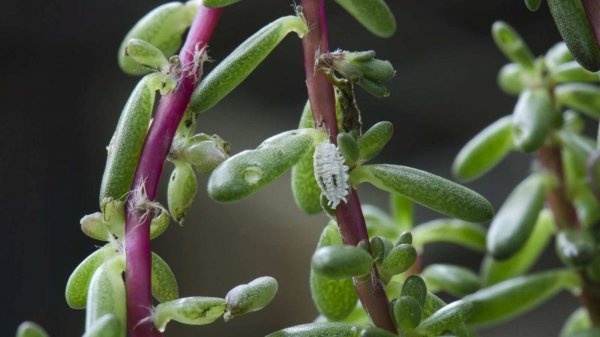
Gardeners often spot white, fluffy, cotton-like clusters on their succulents, only to realize these masses are actually moving. These are mealybugs, scale insects from the Pseudococcidae family that thrive in warm, humid environments, particularly indoors and in greenhouses. They attach to leaves, suck sap, and secrete a waxy coating that shields them and their eggs—sometimes hundreds—from predators and treatments.
While a small infestation may not immediately harm your succulents, mealybugs reproduce rapidly, and a minor issue can escalate into a garden-wide problem. Early detection is critical, as unchecked infestations can cause leaf discoloration, leaf drop, and even plant death. Recognizing the signs—such as the bugs themselves, the fluffy webbing they leave, or the presence of ants that follow them—is the first step to protecting your collection.
Signs of an Infestation
Mealybugs are often hidden in the tight rosettes and compact shapes of succulents, making them hard to spot initially. However, once they move or begin feeding, they become visible as soft white bodies against the leaves. The waxy substance they produce creates a webbing that covers the plant's center. Ants are another indicator; while not a definitive sign, they are attracted to the honeydew mealybugs excrete, so an ant problem warrants a closer inspection of your plants.
As the infestation progresses, the damage becomes more apparent. Leaves may develop discolored spots, change color, and eventually fall off, depending on the succulent species. Immediate action is necessary to prevent the pests from spreading to other plants in your garden.
Step-by-Step Removal
For minor infestations, a few targeted treatments can resolve the issue. For severe cases, a more comprehensive approach is required. The following steps, adapted to the severity, can help you reclaim your succulents.
Isolate the affected plant. Mealybugs spread quickly, so moving a potted succulent to a separate room or a distant part of your outdoor space prevents further contamination. For garden-planted succulents, treat them in place if the infestation is minor; if it's severe, removal may be necessary to stop the spread. During isolation, maintain similar light and temperature conditions to avoid stressing the plant, as treatment can take weeks.
Spray with water. A gentle stream of water dislodges many bugs, making it easier to target the rest. Use a soft spray to avoid damaging leaves, and focus on the foliage rather than the soil to prevent overwatering and root rot.
Apply rubbing alcohol. Isopropyl alcohol at 70% concentration is a favored treatment among succulent growers. Spray it on all plant parts, including between leaves and around the stem, to kill bugs on contact. For precise application, a cotton swab dipped in alcohol can target individual insects, though it may miss hidden ones. Repeat applications may be necessary if new bugs appear within days or weeks.
Use neem oil as an alternative. Neem oil suffocates mealybugs and prevents eggs from hatching. Use a low concentration to avoid burning leaves, and consider adding a few drops of dish soap for stickiness. After application, keep the plant out of direct sunlight to prevent leaf scorch; bright indirect light is ideal until the pests are gone. Neem oil is best for minor infestations and as a preventative measure, and it also requires repeat applications.
Clean the surrounding area. Mealybugs hide in cracks and crevices of furniture and garden structures. Spray these areas with the same alcohol solution, and inspect nearby plants for signs of infestation. Moving the treated succulent to a new spot can help determine if the pests are coming from the plant or the environment, breaking the cycle of reinfestation.
Repot if necessary. If the problem persists, repotting is the final step. Remove all soil, wash the roots, and either scrub the pot with soapy water or use a fresh container. This eliminates any bugs or eggs hiding in the soil, reducing the infestation level and making other treatments more effective.
Left untreated, mealybugs can devastate your succulent collection and spread to other plants. Early diagnosis and prompt action are key. By following these steps, you can effectively manage and eliminate these pests, ensuring your succulents remain healthy and vibrant.